

Onchain B2B leaks commercial terms. Pricing leverage erodes. Treasury intent leaks; CFO-fraud surface expands.
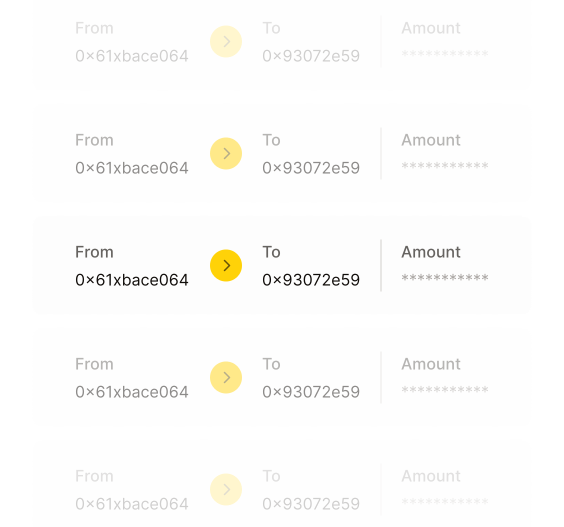
Zama is HTTPS for onchain finance: addresses stay public, amounts get encrypted.
Verifiable
Onchain settlement, fully auditable.
Encrypted
Amounts and references encrypted at the token level.
Compliant
Auditors, sanctions screening, and ERP retain access by role.
Composable
Drops into your existing stack.
The corporate flows that can't be public.
Cross-border vendor settlement, marketplace payouts, treasury and intercompany flows, trade and supply-chain finance, four flows, one rail.

Cross-border vendor settlement
Paying international vendors onchain makes every amount permanently visible to anyone with a block explorer. Settle in minutes without turning your supplier relationships into public data.

Marketplace and platform payouts
Merchant earnings, take rates, and fee structures are readable by every competitor on the chain. Pay out at scale without publishing your commercial model.

Treasury and intercompany flows
FX strategy, rebalancing cadence, and intercompany pricing are observable in real time by anyone watching the ledger. Move treasury onchain without giving the market a live view of your balance sheet.

Trade and supply-chain finance
Onchain invoicing exposes supplier contract values and factor pricing line by line. Finance multi-tier supply chains onchain without revealing the commercial terms behind each transaction.
Zama is a protocol, not a chain.
A standard, not a silo
The Zama Protocol is in production on Ethereum mainnet, asset-agnostic and chain-agnostic, ready to be implemented with USDC, EURC, regulated bank stablecoins, and the custody, treasury, and ERP stack institutions already run.
Client-side Fully Homomorphic Encryption
Vendor payments and balances are encrypted in the corporate AP system, PSP, or treasury platform before they reach the chain. Plaintext never leaves the institution's environment.

Computation on encrypted data
The blockchain processes settlement, FX, intercompany, and reporting without decrypting any of it. Sender and receiver addresses remain public; amounts, balances, and commercial references stay encrypted.
Compliance, control and public verifiability
You decide who sees what, role by role — through the Zama Protocol's ACL and selective disclosure. Auditors, sanctions-screening providers, beneficial-ownership systems, ERP, and treasury workstations retain authorized access; the compliance stack you already run keeps running.

Institutions and teams already building with Zama
From confidential payroll to institutional trading — real deployments, on Ethereum mainnet, today.

Morpho - Confidentiality Meets DeFi Yield
Confidential USDC now earns yield through Steakhouse USDC Prime on Morpho, the same vault strategy and risk profile, with deposit size, direction, and timing encrypted onchain.

T-REX - Institutional-Grade Confidentiality Infrastructure for RWA
Zama became the default confidentiality layer for T-REX Ledger, bringing FHE-powered privacy, compliance and interoperability together in one public blockchain infrastructure built for institutional scale.

Bron - Confidential payroll on Ethereum mainnet.
Bron's CFO paid team salaries on Ethereum mainnet using confidential USDT, amounts encrypted end-to-end with FHE, visible only to sender and recipient.

Raycash - Private, compliant banking rebuilt onchain.
Raycash delivers a Revolut-style banking experience — IBANs, cards, yield — fully self-custodial and powered by Zama's FHE encryption, keeping balances and transactions private while remaining compliant with regulators.

Blockscout - The first explorer to support confidential tokens natively.
Blockscout now indexes and displays ERC-7984 confidential token activity, showing transfers, senders, and recipients onchain while keeping encrypted amounts fully private, powered by the Zama Protocol.
GSR - The first confidential OTC trade on Ethereum mainnet.
GSR executed the first confidential over-the-counter trade using the Zama Protocol, with transaction amounts encrypted onchain between two KYC'd counterparties, eliminating information leakage and front-running risks.
Our investors have backed the most successful blockchain companies globally





Frequently asked questions
Contact
Contact Zama's
Team of Experts
Protocol

Solutions
PRODUCTS
Resources
community
company
