The tokenization of real-world assets has crossed a threshold. More than $32 billion in assets already live onchain under the ERC-3643 standard. Apex Group, which services $3.5 trillion in assets globally, has committed to placing $100 billion in tokenized assets on the T-REX Ledger by June 2027. The market has moved past the question of whether institutions will tokenize. The question now is whether public blockchain infrastructure can actually meet institutional requirements.
The compliance challenge has largely been solved. The confidentiality challenge has not. Until now.
At the center of this infrastructure is ERC-3643, the most widely adopted compliance standard for onchain finance. It is not a proprietary tool of any single firm. It is governed by the ERC-3643 Association, a non-profit whose members include DTCC, Deloitte, Tokeny, Zama, and OpenZeppelin. This collaborative foundation ensures the standard is shaped by the security and functional needs of the entire industry.
ERC-3643 embeds compliance directly into the asset. Identity and eligibility rules travel with the token. T-REX Ledger takes this a step further, acting as the single compliance record that every connected blockchain references before settling a transaction. No matter where an asset moves, the rules that govern it remain intact.
Compliance is solved. But institutions also need to know that the data they put onchain stays confidential. Without that, even the most sophisticated compliance layer is not enough.
Zama does not replace ERC-3643. It enhances it.
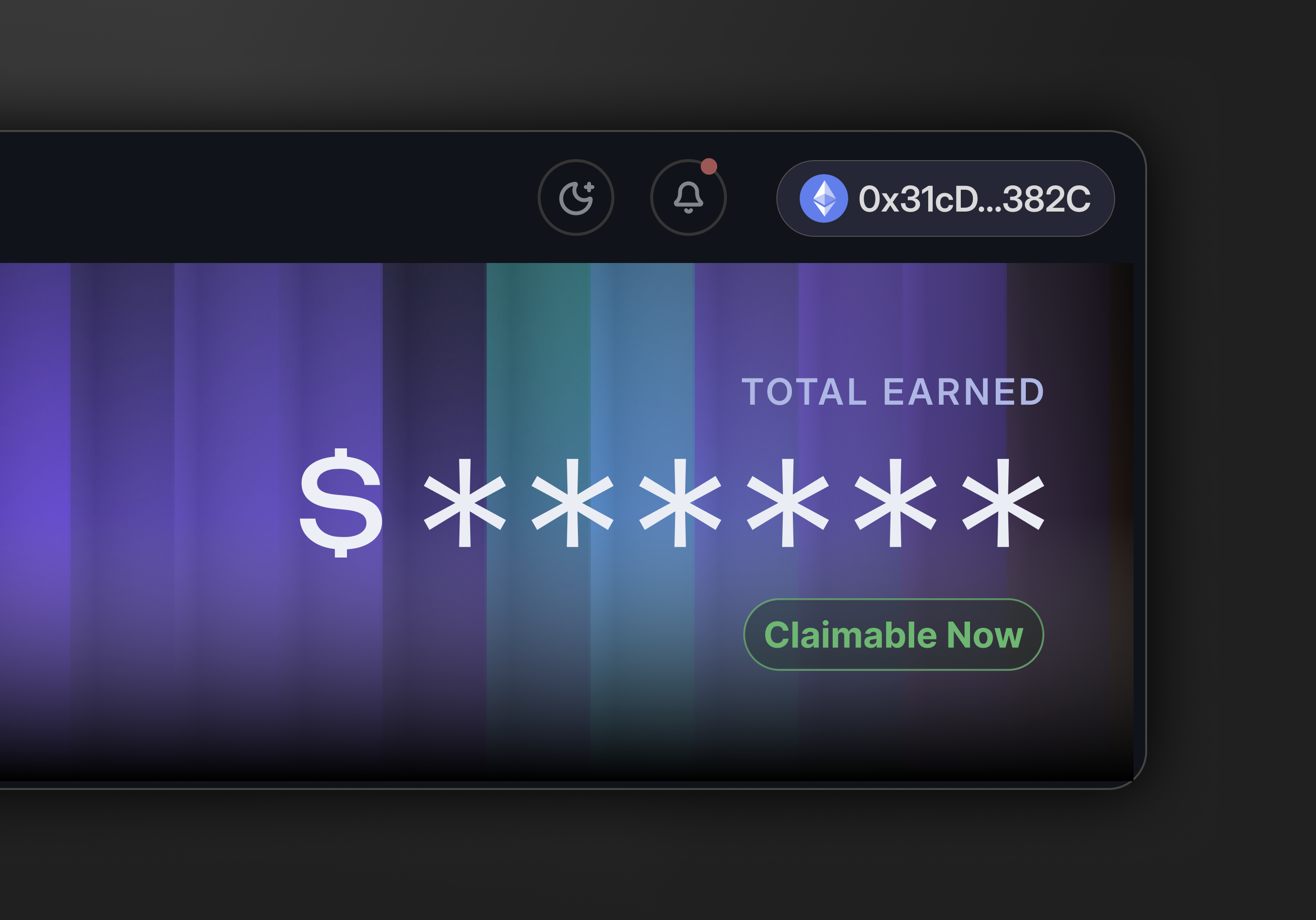
Through this partnership, Zama's FHE protocol is integrated as the native confidentiality layer of the T-REX Ledger, creating a new confidential standard for RWA tokenization. The enhanced ERC-3643 continues to answer the question every asset issuer needs answered: is this investor allowed to transfer this asset? It now also ensures that question can be answered without putting transaction data in the clear onchain. Transferred amounts and resulting balances are encrypted. Any observer can confirm a transaction was properly executed and compliant, without ever seeing the underlying figures.
From an institutional user's perspective, nothing changes. Encryption and decryption happen silently in their environment. Existing positions can be wrapped into confidential equivalents, 1:1, with no migration friction. From that point forward, all transactions are encrypted by default.
The next generation of the $32B+ T-REX pipeline is not only governed by an industry-wide compliance standard. It is confidential by default.
"The T-REX Ledger was built to be the trusted multi-chain orchestration layer for institutional RWAs, but trust also means confidentiality," said Joachim Lebrun, Co-Founder of T-REX Network and Lead Author of the ERC-3643 standard. "Integrating Zama's FHE Protocol directly into the T-REX Ledger means institutions can finally operate fully onchain without exposing their confidential data to the world. That is the missing piece for unlocking real institutional scale."
"Our goal is to make Zama the confidentiality layer for public blockchains, enabling institutions and investors to operate onchain with the same level of confidentiality they expect offchain," said Dr. Rand Hindi, Co-Founder and CEO of Zama. "This collaboration with T-REX Network demonstrates that confidentiality is not an optional feature for institutional blockchain adoption. It is foundational infrastructure."
This partnership marks a decisive transition: from Private Blockchain silos, where institutions traded interoperability for control, to Confidential Public Infrastructure, where that tradeoff no longer exists. The liquidity and efficiency of public networks, with the confidentiality institutions require, delivered as a single open, industry-governed stack.
Compliance travels with the asset. Now, so does confidentiality.
By embedding FHE directly into the T-REX Ledger, both companies are making a deliberate architectural statement: confidentiality for institutional finance should be shared infrastructure, not a proprietary offering any single participant controls.
The ERC-3643 standard and the T-REX Ledger are open and governed by the broader ecosystem. Zama's FHE protocol is integrated at that same foundational level. Any institution, transfer agent, or asset manager that builds on the T-REX Ledger inherits confidentiality as a default, not as an upgrade they have to purchase or configure separately.
For a market targeting $100 billion in tokenized assets by mid-2027, and an industry broadly moving toward putting regulated securities on public chains, that is exactly the kind of infrastructure that makes the next step possible.
News, research and product releases
Protocol

Solutions
PRODUCTS
Resources
community
company

.svg)
.svg)